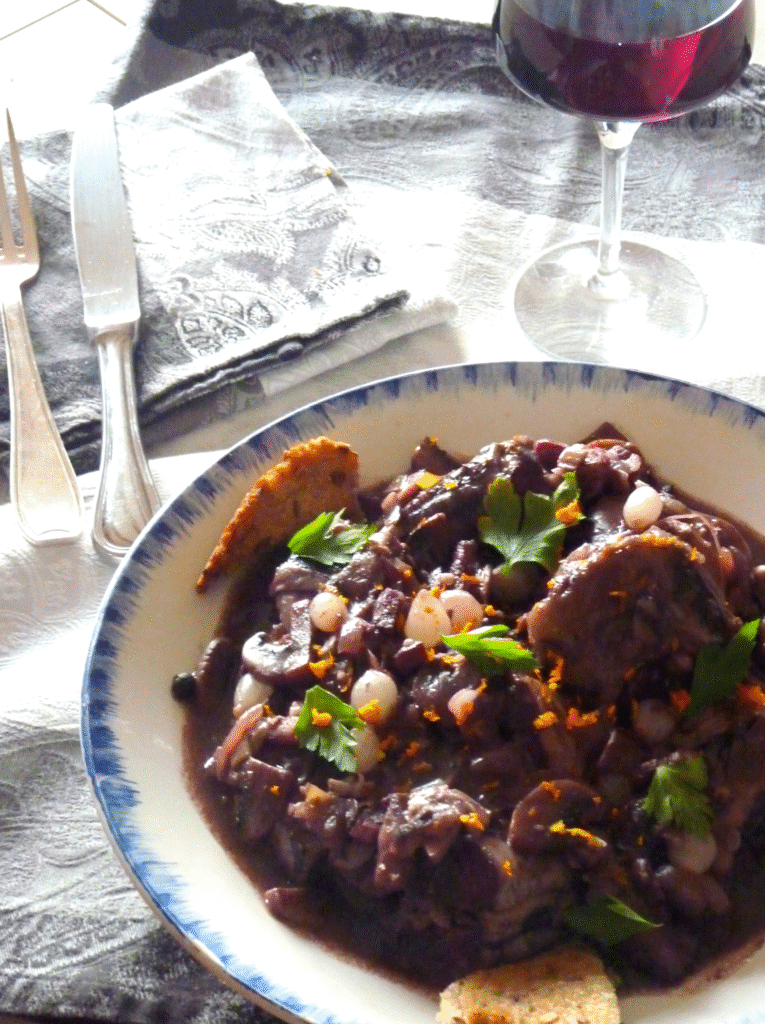
I’ll be honest, the first time I saw eel simmering in a pot of dark red wine, I was more than a little skeptical. It was in a tiny, low-ceilinged restaurant in Burgundy, and the chef insisted I try it. That first bite was a revelation—the eel was impossibly tender, almost like a cross between firm fish and slow-braised meat, and the sauce was deep, rich, and complex. This fisherman’s stew, or matelote, is a bold, rustic masterpiece. It’s a project, but one that fills your kitchen with the most incredible aroma and rewards you with a taste of genuine French tradition.
Quick Look
| Prep | Cook | Total | Feeds | Level |
|---|---|---|---|---|
| 30 min (plus marinating) | 1.5 hours | 2+ hours | 4 | A rewarding project |
Why You’ll Love This Recipe
- It’s a culinary adventure: It introduces you to a unique ingredient and a classic French technique you’ll be proud to master.
- The sauce is everything: Deep, wine-dark, and aromatic, it’s the kind of sauce you’ll want to sop up with every last bit of bread.
- It’s surprisingly forgiving: The long, slow simmer ensures the eel becomes perfectly tender and infuses everything with flavor.
- Perfect for a special occasion: This is a showstopping dish that tells a story.
Grab These
- 2 lbs freshwater eel, skinned and cut into 2-inch chunks (your fishmonger is your best friend here!)
- 1 bottle (750 ml) full-bodied red Burgundy (a Pinot Noir works perfectly)
- 2 tbsp red wine vinegar
- 1 large onion, roughly chopped
- 2 carrots, thickly sliced
- 2 cloves garlic, crushed
- 1 bouquet garni (a few sprigs of thyme, 2 bay leaves, and a handful of parsley stems, tied together)
- 2 whole cloves
- 10 black peppercorns
- 3 tbsp unsalted butter, divided
- 2 tbsp all-purpose flour
- 1 cup pearl onions, peeled (a quick blanch makes this easier)
- ½ lb cremini mushrooms, halved if large
- 2 tbsp Cognac or brandy
- Salt and freshly ground black pepper
- For serving: Toasted baguette slices, rubbed with a garlic clove
Let’s Make It
This recipe starts a day ahead. Place the eel chunks in a large, non-reactive bowl. Add the red wine, vinegar, chopped onion, carrots, crushed garlic, bouquet garni, cloves, and peppercorns. Give it a gentle stir, cover, and let it marinate in the refrigerator for at least 4 hours, but ideally overnight. This tenderizes the eel and is the foundation of the flavor.
The next day, use a slotted spoon to remove the eel from the marinade. Pat the pieces very dry with paper towels—this is crucial for getting a good sear. Reserve the marinade liquid and all the solid aromatics separately.
Melt 2 tablespoons of the butter in a large Dutch oven over medium-high heat. Working in batches to avoid crowding, sear the eel chunks for about a minute on each side until they have a nice color. They won’t be cooked through. Remove them to a plate and set aside.
In the same pot, add the reserved vegetables and aromatics from the marinade. Sauté for 5-7 minutes, until the onions have softened a bit and everything is fragrant. Sprinkle the flour over the top and cook, stirring constantly, for about 2 minutes to cook off the raw flour taste.
Now, gradually pour in the reserved marinade liquid, stirring constantly to avoid any lumps. Bring this to a simmer, then gently place the seared eel back into the pot. The liquid should just about cover everything. Reduce the heat to low, cover, and let it simmer gently for 45 minutes to 1 hour. You’re looking for the eel to be fork-tender.
While that’s happening, melt the remaining tablespoon of butter in a separate skillet. Add the pearl onions and mushrooms, and sauté until the mushrooms have released their water and both are nicely browned, about 8-10 minutes. Set these aside.
Once the eel is tender, carefully remove the pieces to a warm serving platter using a slotted spoon. Now, strain the entire cooking liquid through a fine-mesh sieve into a clean pot, pressing on the solids to get all that delicious flavor out. Discard the solids.
Add the Cognac and the sautéed mushrooms and pearl onions to the strained sauce. Bring it to a simmer and let it reduce for about 5-10 minutes until it coats the back of a spoon nicely. Taste and season with salt and pepper. Pour the glorious sauce over the waiting eel.
Nutritional Facts (Per Serving)
| Nutrient | Amount |
|---|---|
| Calories | ~ 520 kcal |
| Protein | 32g |
| Carbohydrates | 18g |
| Fat | 28g |
| Saturated Fat | 10g |
| Fiber | 3g |
| Sugar | 8g |
| *Note: | Values are estimates |
Variations & Add-Ins
- Different Protein: If eel feels like a bridge too far, this method is fantastic with firm-fleshed fish like monkfish, halibut, or even salmon.
- Bacon Boost: Render 4 oz of chopped bacon at the start and use the fat to sear the eel for an extra layer of smoky depth.
- Herb Finish: Stir in a tablespoon of fresh, chopped parsley or tarragon right before serving for a bright, fresh finish.
Serving Ideas
- The Classic Way: Serve it family-style right from the platter, with a huge pile of garlic-rubbed toasted baguette for dipping into that incredible sauce.
- With Creamy Potatoes: A side of buttery mashed potatoes or a creamy potato gratin is the ultimate comfort pairing.
- With a Bright Salad: A simple, sharp salad of bitter greens (like endive or frisée) with a lemon vinaigrette is essential for cutting through the richness.
Storage & Reheating
- Storage: Let the stew cool completely before transferring to an airtight container. It will keep in the refrigerator for up to 2 days.
- Reheating: Gently reheat in a saucepan over low heat. Do not boil, as it can make the eel tough. The sauce may thicken when chilled; just add a small splash of water or broth to loosen it up.
- Freezing: I do not recommend freezing this dish, as the texture of the eel can become mushy upon thawing.
My Two Cents
- Pro-Tip: Don’t skip the step of straining the sauce after cooking. It seems like a fussy step, but it transforms a rustic, chunky broth into a silky, refined, and deeply flavorful sauce that is the hallmark of a great matelote.
You Asked, I’m Answering
Q: I’m really nervous about handling eel. Any advice?
A: I totally get it! The best thing you can do is befriend your fishmonger. Ask them to clean, skin, and cut the eel into chunks for you. Once it’s prepped, it’s surprisingly straightforward to cook with—just handle it like you would any firm fish.
Q: Is the marinade really that important?
A: In this recipe, yes, it absolutely is. It’s not just for flavor; the acidity from the wine and vinegar plays a key role in tenderizing the unique texture of the eel.