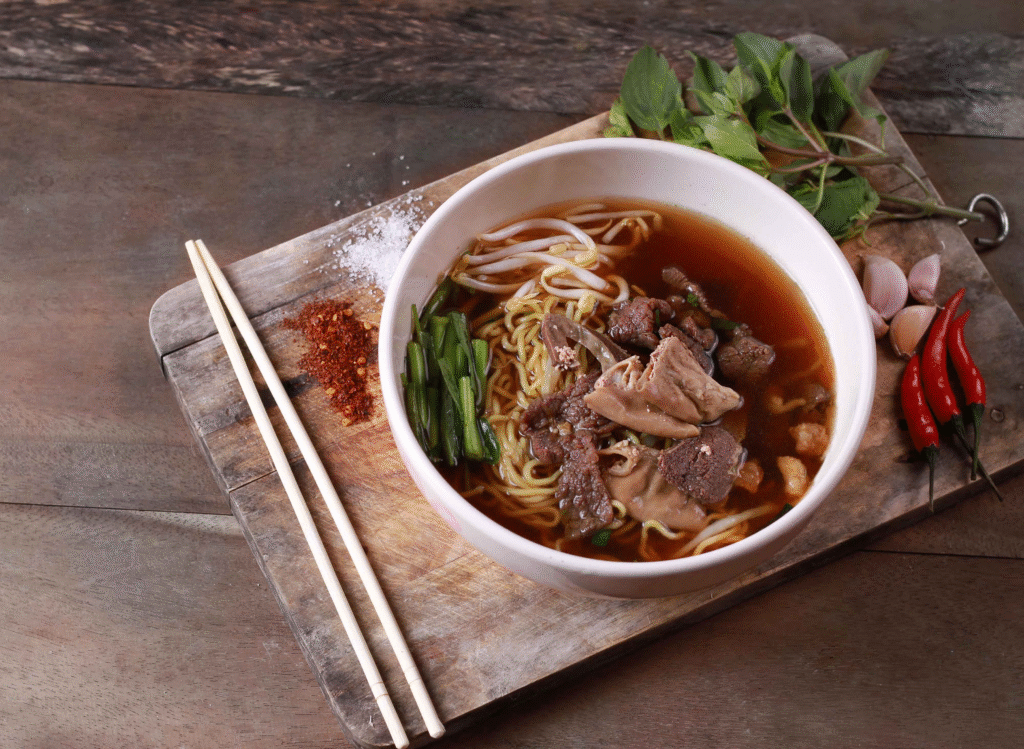
I will never forget the first time I watched a master pull noodles in a tiny shop in Xi’an. His hands were a blur, a piece of dough transforming into a hundred silken threads in seconds, like magic. It was a ballet of flour and force. I came home obsessed. For weeks, my kitchen looked like a flour bomb had gone off. I had more failed, lumpy, snapping doughs than I care to admit. My husband started calling my attempts “noodle bricks.” But then, after what felt like a hundred tries, something clicked. The dough finally sighed and yielded, stretching and folding like a living thing. This recipe is the culmination of that obsession. It’s a project, I won’t lie to you. But making these noodles from scratch is a kind of therapy. And the broth? It’s the clearest, most deeply spiced, profoundly aromatic liquid I’ve ever had the pleasure of sipping. This isn’t just dinner. It’s an experience.
Quick Look
| Prep | Cook | Total | Feeds | Level |
|---|---|---|---|---|
| 2 hrs (incl. rest) | 4 hrs | 6 hrs | 4 people | Advanced |
Why You’ll Love This Recipe
- The unparalleled pride of pulling your own noodles. The feeling is incredible, a true kitchen superpower.
- The broth is liquid gold. Clear, complex, aromatic, and deeply beefy without being heavy.
- It’s a complete sensory experience. From the smell of the spices to the sight of the swirling noodles.
- The customizable toppings let everyone build their perfect bowl.
Grab These
For the Broth & Beef:
- 2 lbs beef soup bones (marrow bones are ideal)
- 1 lb beef brisket or shank, cut into large chunks
- 1 large yellow onion, halved (no need to peel)
- 1 whole head of garlic, halved horizontally
- 4-inch piece of ginger, smashed
- 4 green onions, white parts only (save the greens for garnish)
- 2 tbsp vegetable oil
The Aromatic Spice Sachet:
- 3 Star Anise
- 1 Cinnamon stick
- 1 tsp Sichuan Peppercorns
- 1 tsp Fennel Seeds
- 4-5 Cloves
- 2 Black Cardamom Pods (this is key for that smoky depth)
- 1 small piece of Dried Tangerine Peel (optional, but amazing)
For the Hand-Pulled Noodles:
- 4 cups (500g) all-purpose flour, plus more for dusting
- 1 ¼ cups (300ml) water
- 1 tsp salt
- 1 tbsp vegetable oil
- 1 tbsp kansui (alkaline water) – this is the secret for the springy texture and yellow hue. You can find it online or in Asian markets. (A substitute is ½ tsp baked baking soda, but kansui is better.)
For the Bowl & Toppings:
- Sliced cooked beef from the broth
- Sliced Bai Ji Dan (white radish/daikon) – a classic Lanzhou addition
- Chopped green onions (the green parts!)
- Fresh cilantro, chopped
- Chili Oil (I have a strong opinion that Lao Gan Ma is the only acceptable store-bought choice here)
- Toasted sesame seeds
Let’s Make It
First, we must build our foundation: the broth. This cannot be rushed. Preheat your oven to 450°F (230°C). Toss the beef bones and brisket chunks with the vegetable oil and spread them out on a baking sheet along with the halved onion and garlic. Roast for 30-40 minutes, turning once, until everything is deeply browned and fragrant. This step is non-negotiable. It’s what gives the broth its rich, caramelized depth.
Transfer the roasted bones, meat, and aromatics to a large stockpot. Pour a cup of water onto the hot baking sheet to deglaze, scraping up all those beautiful browned bits, and add that to the pot too. Cover everything with about 12 cups of cold water. Bring it to a boil, then immediately reduce to the gentlest possible simmer. You want the barest whisper of a bubble. Skim off any scum that rises to the top in the first 20 minutes. Now, add your spice sachet (I tie mine in a piece of cheesecloth). Let this simmer, uncovered, for at least 3 hours. Do not let it boil aggressively, or your broth will be cloudy. We’re aiming for a clear, clean flavor. After 2 hours, fish out the brisket chunks—they should be tender. Set them aside to slice later. Let the bones and spices go the full distance.
While the broth works its magic, we confront the dragon: the noodles. In a large bowl, whisk together the flour and salt. In a separate jug, mix the water, oil, and kansui. Make a well in the flour and gradually pour in the liquid, mixing with a fork until a shaggy dough forms. Turn it out onto a clean surface and start kneading. This is a stiff, tough dough. You will use muscles you forgot you had. Knead for a solid 10-15 minutes. I’m not kidding. It should become completely smooth and pliable. The traditional test is to press a finger into it; the dough should spring back slowly. Form it into a ball, rub it with a little oil, place it in a bowl, cover it with plastic wrap, and let it rest for at least 2 hours. This rest is what allows the gluten to relax, making the pulling possible.
Now, the main event. Cut your rested dough into 4 equal pieces. Work with one piece at a time, keeping the others covered. Roll the dough into a long log. Now, the pull. Hold the log by the ends. Gently slap it against the counter to stretch the middle. Fold it back on itself. Twist. Stretch again. This is hard to describe in words—it’s a feeling. You’re coaxing it, not forcing it. Watch a video. Then practice. You’ll start to feel the dough give way, stretching thinner and thinner, doubling back on itself until you have a handful of wobbly, live noodles. Dust them liberally with flour to prevent sticking. Repeat with the remaining dough. Don’t be discouraged if they break. My first successful batch was thick and uneven, and they were still the best noodles I’d ever eaten.
Nutritional Facts (Per Serving)
| Nutrient | Amount |
|---|---|
| Calories | ~ 650 kcal |
| Protein | 40g |
| Carbohydrates | 85g |
| Fat | 18g |
| Fiber | 4g |
| Sugar | 5g |
| *Note: | Values are estimates |
Variations & Add-Ins
- Lamb Broth: Swap the beef bones for lamb neck bones for a gamier, equally traditional version.
- Quick Fix: Use high-quality, thick, fresh store-bought noodles (like Shanghai thick noodles) if the hand-pulling feels like too much. The broth is still worth it.
- Veggie Delight: Use a rich mushroom broth and top with sautéed king oyster mushrooms and bok choy.
Serving Ideas
To assemble, bring your pristine broth to a rolling boil. Cook your fresh noodles for just 1-2 minutes—they cook in a flash. Lift them out with a strainer and place them into deep bowls. Thinly slice the reserved cooked brisket and place it on one side of the noodles. Ladle the piping hot broth over everything. The heat will cook the noodles further and warm the beef. Top with slices of blanched daikon, a mountain of green onions, and a generous handful of cilantro. The final, crucial step: a big spoonful of vibrant red chili oil, drizzled right over the top. Serve immediately.
Storage & Reheating
Broth and cooked beef can be stored separately in the fridge for up to 5 days or frozen for 3 months. The noodle dough can be rested in the fridge for up to 24 hours, but it’s best to pull and cook them fresh. Uncooked, pulled noodles can be dusted with cornstarch and frozen on a tray before bagging; cook from frozen.
My Two Cents
The single most important tip for the noodles is the rest. I know I’ve said it, but it bears repeating. A dough rested for 2 hours is pliable and willing. A dough rested for only 30 minutes is a stubborn, snapping mess. Your patience is the most crucial ingredient. Set a timer, walk away, and let the gluten do its thing.
You Asked, I’m Answering
“My dough is too dry and keeps snapping!”
It’s likely under-kneaded or under-rested. Try kneading it for another 5 minutes, then let it rest for another hour. The environment matters too—a dry kitchen might require a tiny bit more water.
“My broth is cloudy! Is it ruined?”
Not at all! It will still taste delicious. Cloudiness usually comes from boiling too hard instead of simmering, or not skimming enough at the beginning. For a clearer broth next time, keep the heat low and skim diligently.
“I can’t find kansui. What now?”
You can make a substitute by baking baking soda. Spread ¼ cup of baking soda on a parchment-lined baking sheet and bake at 250°F (120°C) for 1 hour. This changes its chemical structure, making it more alkaline. Use ½ tsp of this baked baking soda in place of the tbsp of kansui. The results are good, but not quite as springy or yellow.