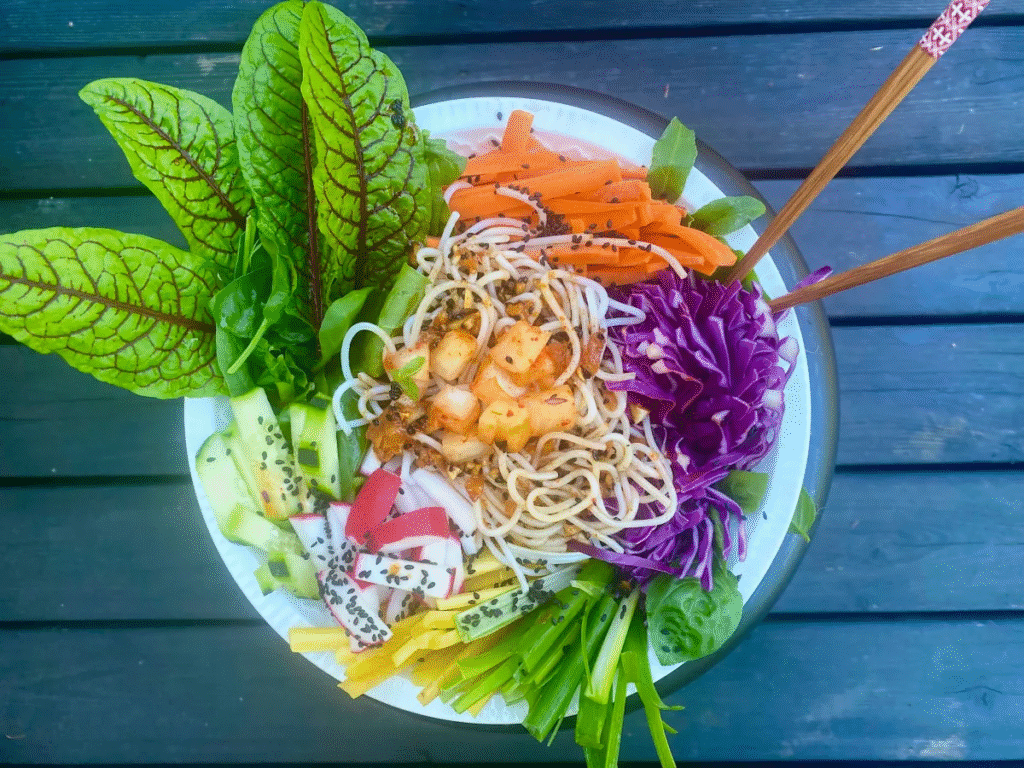
There is a specific, glorious kind of chaos that defines a Seoul summer. It’s humid, it’s loud, and the air thrums with energy. And the only proper remedy, I discovered while living there, is a bowl of Bibim Guksu. But not just any bowl. I’m talking about the kind that makes your brow glisten and your lips tingle, the kind you slurp down with unapologetic urgency. This version, my ultimate take, came from a desperate need to use up some leftover grilled pork belly. The marriage was instant and profound. The rich, crispy pork belly against the bracing, spicy, sweet, and tangy noodles is a contrast so perfect it feels like destiny. This isn’t a subtle dish. It’s a vibrant, shouting-from-the-rooftops kind of meal that’s as fun to make as it is to eat. It’s my go-to when the temperature soars and my spirit needs a jolt of pure, unadulterated joy.
Quick Look
| Prep | Cook | Total | Feeds | Level |
|---|---|---|---|---|
| 30 mins | 15 mins | 45 mins | 2 people (or 1 very hungry person) | Easy |
Why You’ll Love This Recipe
- It’s a symphony of contrasts. Cool noodles, hot spice, rich pork, tangy kimchi—every bite is an adventure.
- It comes together in a flash. The active time is minimal, perfect for a weeknight when you need something exciting.
- It’s endlessly customizable. Add a fried egg, swap the protein, adjust the heat—it’s your canvas.
- The leftovers are a secret weapon. The noodles soak up the sauce overnight, becoming even more delicious.
Grab These
For the Pork Belly:
- ½ lb skinless pork belly, sliced into ¼-inch thick strips
- 1 tbsp soy sauce
- 1 tsp toasted sesame oil
- 1 clove garlic, grated
- A few grinds of black pepper
For the Spicy Sauce (The Soul of the Dish):
- 3 tbsp gochujang (Korean red chili paste)
- 1 tbsp gochugaru (Korean red chili flakes) – for texture and heat
- 2 tbsp rice vinegar
- 1 tbsp soy sauce
- 1 tbsp sugar or honey
- 1 tbsp toasted sesame oil
- 1 clove garlic, grated
- 1 tsp toasted sesame seeds
For the Noodles & Assembly:
- 8 oz (about 2 bundles) somyeon or thin wheat noodles
- 1 cup very ripe, tangy kimchi, roughly chopped (plus 2 tbsp of the juice!)
- 1 Persian cucumber, julienned or thinly sliced
- ½ cup shredded red cabbage or carrot (for color and crunch)
- 2 soft-boiled or fried eggs (optional, but highly recommended)
- More toasted sesame seeds and sliced green onion for garnish
Let’s Make It
First, let’s get our pork belly glorious. In a small bowl, toss the pork belly strips with the soy sauce, sesame oil, grated garlic, and black pepper. Let it marinate for just 15 minutes while you prep everything else. Don’t skip this—it’s a quick flavor infusion that makes a world of difference. Heat a dry, non-stick or cast-iron skillet over medium-high heat. No oil needed—the pork belly will render its own. Lay the strips in the hot pan and don’t move them. Let them sizzle and crisp up for 3-4 minutes per side, until they’re bronzed and crispy at the edges and the fat has rendered. Remove them to a paper-towel-lined plate. That crispiness is everything.
While the pork cooks, let’s make the magic sauce. This is so simple it’s almost embarrassing. Just whisk everything together in a bowl large enough to eventually hold all your noodles: the gochujang, gochugaru, rice vinegar, soy sauce, sugar, sesame oil, grated garlic, and sesame seeds. Taste it. Is it too spicy? Add a touch more sugar. Too sweet? A splash more vinegar. This is your sauce—make it yours. Now, stir in the 2 tablespoons of kimchi juice. This is the pro-move. It adds a fantastic tang and amplifies that fermented kimchi flavor throughout the entire dish.
Next, the noodles. Bring a large pot of water to a boil. Cook your somyeon noodles according to the package directions, but check them a minute early—they cook fast! The second they’re al dente, drain them and immediately rinse them under cold, cold running water while using your hands to swish them around. You want to wash off all the surface starch and shock them completely cold. This gives them that perfect, springy, chewy texture. Drain them very well.
Now, the best part: the assembly. Plop the cold, well-drained noodles right into the bowl with your spicy sauce. Using tongs or two forks, toss them until every single strand is coated in that vibrant red glaze. It’s a beautiful sight. Divide the saucy noodles between two bowls. Top with your crispy pork belly, the chopped kimchi, the julienned cucumber, and the shredded cabbage. If you’re using the egg, place it right on top, ready for its yolk to become part of the sauce. Finish with a flurry of sesame seeds and green onion.
Nutritional Facts (Per Serving)
| Nutrient | Amount |
|---|---|
| Calories | ~ 680 kcal |
| Protein | 25g |
| Carbohydrates | 65g |
| Fat | 35g |
| Fiber | 4g |
| Sugar | 15g |
| *Note: | Values are estimates |
Variations & Add-Ins
- Vegetarian Twist: Skip the pork belly and use pan-fried, extra-crispy tofu or seasoned soy-marinated mushrooms.
- Seafood Lover: Top with cooked, chilled shrimp or sliced squid.
- Extra Crunch: Add a handful of crushed roasted seaweed (gim) or even some crushed peanuts right before serving.
Serving Ideas
Serve this immediately, with cold beer or iced barley tea (boricha) on the side. Have kitchen shears handy to cut the noodles if they’re long, and encourage everyone to mix everything together thoroughly before diving in. The integration is key!
Storage & Reheating
The components are best stored separately. The sauce will keep for a week in the fridge. The cooked noodles can be stored in a sealed container with a tiny splash of water to prevent sticking for a day. The pork belly is best eaten fresh but can be reheated in a skillet to re-crisp. Assembled, it doesn’t keep well as the noodles will soften.
My Two Cents
Don’t just drain your noodles—wash them. I’m serious. Rinsing them under cold water until they’re completely cool is the single most important step for achieving the perfect springy, chewy texture (that “Q” factor). If you skip this, the noodles will be gummy, sticky, and warm, which completely ruins the refreshing spirit of the dish. It takes one extra minute but makes all the difference.
You Asked, I’m Answering
“My noodles clumped together after rinsing!”
You didn’t drain them well enough, or you left them sitting too long. After rinsing, shake the colander vigorously and toss them with a tiny, and I mean tiny, bit of toasted sesame oil to prevent sticking if you’re not saucing them immediately.
“It’s too spicy for me! How can I tone it down?”
Easy! Reduce the gochujang to 2 tablespoons and the gochugaru to 1 teaspoon. You can always add more, but you can’t take it out. Adding a tablespoon of mayonnaise or a dollop of plain yogurt to your individual portion when mixing also wonderfully tames the heat.
“Can I use a different cut of pork?”
Absolutely. Thinly sliced pork shoulder (butt) or even ground pork works well. Just make sure to get a good crisp on it. The belly is for that unmatched combination of crisp meat and unctuous fat.