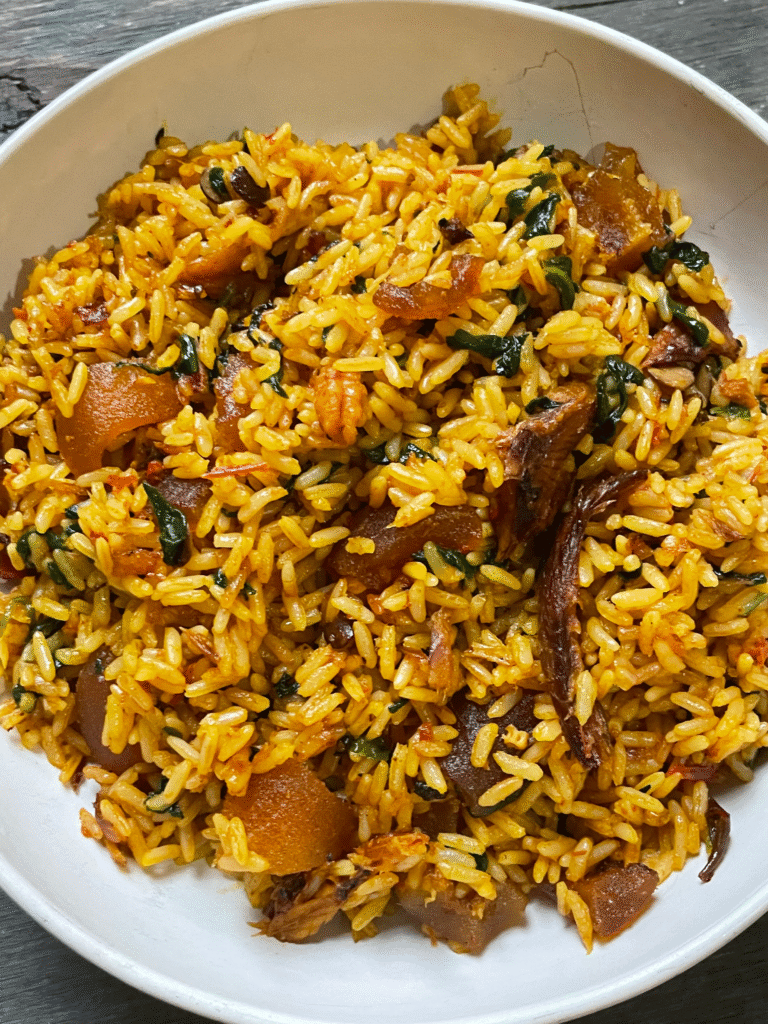
My first taste of Igba-Egusi was not in a restaurant, but in a bustling family compound in Owerri. The air was thick with laughter and the rhythmic pounding of yam in a mortar. An Aunty, with hands that moved with swift, knowing grace, handed me a small, warm calabash bowl. Inside was a mound of rice, but it was unlike any rice I had ever seen. It was cloaked in a coarse, nutty paste, studded with flakes of smoked fish and shimmering with deep red palm oil. I took a bite, and the world narrowed to that single, complex taste: the earthy bitterness of the ugwu leaves, the smoky seafood, the nutty egusi, and the profound, almost primal richness of the palm oil. It was hearty, rustic, and deeply sophisticated all at once. This is my humble attempt to capture that memory in a recipe. It’s a dish that demands your attention, that asks you to toast and grind, to build flavors layer by layer. It’s a Sunday project, a love letter to tradition, and the most satisfying pot of rice you will ever make.
Quick Look
| Prep | Cook | Total | Feeds | Level |
|---|---|---|---|---|
| 1 hr | 1 hr | 2 hrs | 6-8 people | Advanced |
Why You’ll Love This Recipe
- The flavor is an unforgettable symphony. Nutty, smoky, bitter, and rich, all in perfect, bold harmony.
- It’s a textural adventure. The coarse egusi paste, fluffy rice, and flaky fish create a captivating mouthfeel.
- It’s a celebration of West African pantry staples. This is where palm oil, crayfish, and egusi truly shine.
- The process is a meditation. Toasting, grinding, and layering is a deeply satisfying culinary ritual.
Grab These
For the Smoked Seafood Stock:
- 1 large smoked mackerel or catfish (about 1 lb), deboned and flaked
- 1 medium onion, quartered
- 1-inch piece of ginger, smashed
- 2 cloves garlic, smashed
- 1 tbsp dried crayfish (this is your umami powerhouse)
- 1 tsp whole peppercorns
- 8 cups water
For the Egusi Paste & Rice:
- 2 cups raw egusi (melon seeds)
- 1 large red onion, roughly chopped
- 2-3 scotch bonnet peppers, stemmed (adjust to your heat tolerance)
- ½ cup warm water
- ⅔ cup red palm oil (This is NON-NEGOTIABLE for authentic flavor and color)
- 3 cups long-grain parboiled rice, rinsed until water runs clear
- 1 bunch fresh ugwu (pumpkin leaves) or spinach, washed and finely sliced
- 2 tablespoons ground crayfish
- 1 tbsp iru (fermented locust beans) – optional, but adds a fantastic funky depth
- Salt and white pepper to taste
Let’s Make It
First, we must build our oceanic foundation. Place the smoked fish, onion, ginger, garlic, whole crayfish, and peppercorns in a large pot with the 8 cups of water. Bring to a boil, then reduce the heat and let it simmer, uncovered, for 25-30 minutes. This isn’t just making stock; it’s awakening the soul of the smoked fish and infusing the water with its essence. Strain the stock through a fine-mesh sieve into a large bowl, reserving both the flaked fish and the liquid. You should have a beautifully fragrant, golden broth. This is your liquid gold.
Now, the heart of the dish: the egusi. In a dry skillet over medium-low heat, toast the raw egusi seeds, stirring constantly, for 8-10 minutes. You’re looking for a deep golden color and a nutty, popcorn-like aroma. Do not walk away; they can burn in a heartbeat. Let them cool completely.
Once cool, transfer the toasted egusi to a blender. Add the chopped red onion and scotch bonnet peppers. Add the ½ cup of warm water and blend until you have a very thick, coarse paste. It should not be smooth; you want some texture. This paste is the defining character of your dish.
Now, we assemble the masterpiece. In a large, heavy-bottomed pot (a Dutch oven is perfect), heat the red palm oil over medium heat until it’s warm and shimmering. It should not smoke. Carefully add the egusi paste to the hot oil. It will sizzle and sputter. Now, you must fry the paste. Stir it continuously for a good 8-10 minutes. You will see it change: it will darken, thicken, and the oil may start to separate at the edges. This step, “frying the egusi,” is crucial. It cooks out the raw taste and unlocks a deep, nutty, almost buttery flavor that is the soul of this dish.
Once the egusi is fried, add the flaked, reserved smoked fish and the ground crayfish (and iru, if using). Stir for another minute. Now, pour in 5 cups of your reserved smoked seafood stock. Bring it to a rolling boil. Season the broth aggressively with salt and white pepper. It must taste well-seasoned now, as the rice will absorb much of it.
Gently stir in the rinsed parboiled rice. Bring it back to a boil, then immediately reduce the heat to the lowest possible setting. Cover the pot with a tight-fitting lid and let it cook, undisturbed, for 20 minutes.
After 20 minutes, quickly lift the lid and scatter the finely sliced ugwu or spinach over the top of the rice. Do not stir. Replace the lid and let it cook for another 5-7 minutes, just until the greens have wilted.
Turn off the heat. Now, the final act of patience: let the pot sit, covered and undisturbed, for another 15 minutes. This allows the rice to steam to perfection, the greens to tenderize, and all the flavors to marry into a cohesive whole.
Nutritional Facts (Per Serving)
| Nutrient | Amount |
|---|---|
| Calories | ~ 580 kcal |
| Protein | 22g |
| Carbohydrates | 65g |
| Fat | 25g |
| Fiber | 5g |
| Sugar | 3g |
| *Note: | Values are estimates |
Variations & Add-Ins
- Meat Lover’s Version: Add chunks of pre-cooked beef or goat meat with the smoked fish for an even heartier dish.
- Extra Creamy: Stir in ½ cup of coconut milk along with the stock for a richer, slightly sweet undertone.
- Different Greens: Kale or collard greens can stand in for ugwu if necessary, though the flavor will shift.
Serving Ideas
This is a complete meal in a pot. Serve it family-style, directly from the Dutch oven, with extra fried fish or boiled plantains on the side for those who want it. A cold glass of palm wine or a sharp, ginger-based beer is the perfect accompaniment.
Storage & Reheating
Leftovers will keep in the fridge for up to 4 days. The flavors deepen beautifully. Reheat gently in a saucepan with a splash of water to prevent drying out, or in the microwave, covered.
My Two Cents
The single most important step is toasting and frying the egusi. Do not skip toasting the raw seeds; it transforms them from bland and bitter to nutty and complex. And do not rush the frying of the paste in the palm oil. You are essentially making a “roux” of sorts, and that cooked, nutty base is what defines an exceptional Igba-Egusi from a merely good one. Your patience here is the secret ingredient.
You Asked, I’m Answering
“My egusi paste is too thick and won’t blend!”
Add warm water, one tablespoon at a time, until the blender can move. You want the thickest paste possible, but it must be blendable. The water helps it form a paste and also creates steam that cooks the egusi further when fried.
“The rice is sticking to the bottom of the pot!”
Your heat was too high during the simmering stage. The lowest possible heat is key. If it happens, don’t scrape the bottom when you fluff it. A little crispy bottom (kpotokpo) is a delicacy to some!
“I can’t find ugwu leaves or palm oil. What can I do?”
Spinitch is the best substitute for the greens. For the palm oil, there is no true substitute for the flavor, but you could use a mix of red bell pepper puree and a neutral oil for color in a pinch—though the authentic, earthy taste will be missing. I highly recommend seeking out the real deal.