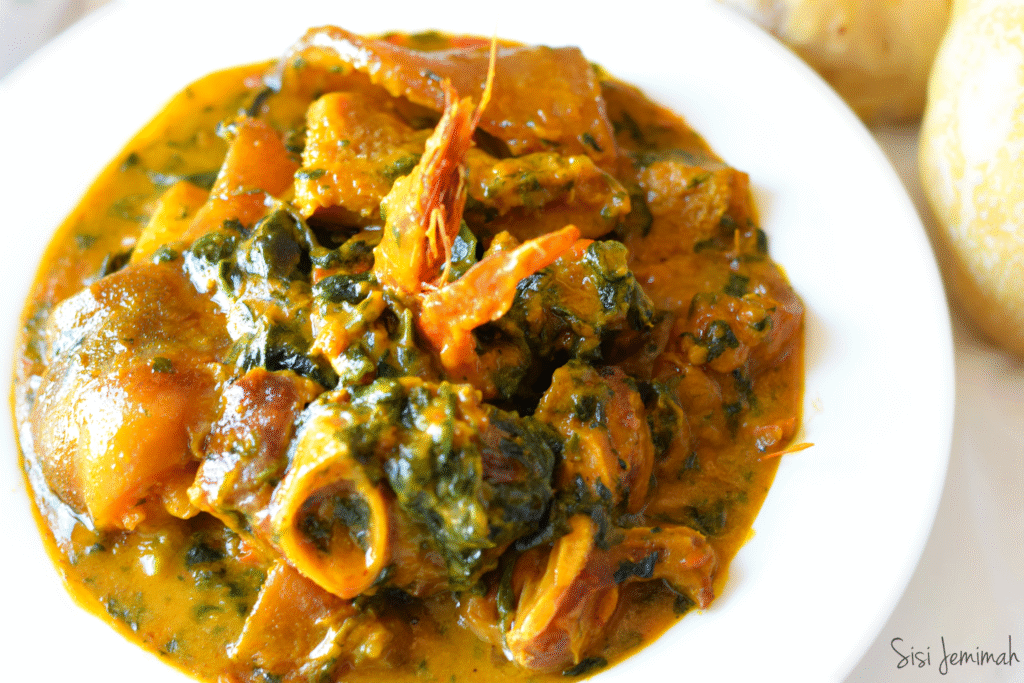
There is a particular wisdom in Nigerian cuisine, a understanding that pleasure and pain, sweetness and bitterness, are two sides of the same coin. No dish embodies this more than Ofe Onugbu. My first encounter with it was as a teenager, visiting family. I watched my Aunty spend what felt like an eternity washing and re-washing a mountain of dark green leaves in a basin, her hands moving with a rhythmic patience. “You have to take the time to wash the bitterness away,” she said, “but not all of it. You must leave just enough.” When I finally tasted the finished soup, I understood. It was deep, robust, and earthy, with a complex, pleasant bitterness that lingered at the back of the throat—not as an assault, but as a sophisticated, intriguing finish. It’s a taste that grows on you, that you find yourself craving. This soup is a ritual. It demands respect for its process. But the reward is a bowl of profound, soul-stirring comfort that is unlike anything else in the world.
Quick Look
| Prep | Cook | Total | Feeds | Level |
|---|---|---|---|---|
| 1 hr (mostly for washing leaves) | 1 hr 15 mins | 2 hrs 15 mins | 6-8 people | Advanced |
Why You’ll Love This Recipe
- It’s a unique and acquired taste. The bitter note is complex, sophisticated, and deeply satisfying.
- The process is a meditation. Washing the bitterleaf is a rhythmic, almost therapeutic task.
- It’s incredibly nutritious. Bitterleaf is known for its medicinal properties in traditional medicine.
- It’s a celebration of texture. The thick, pudding-like consistency from the cocoyam is pure comfort.
Grab These
For the Stock & Meat:
- 2 lbs assorted meat (beef, goat meat, cow skin (ponmo), and stockfish (soaked overnight)
- 1 medium onion, quartered
- 2 stock cubes
- Salt to taste
For the Soup Base:
- 1 cup washed bitterleaf (see instructions below – if using dried, you’ll need about 2 cups, soaked and washed)
- 2 cups cocoyam (about 3-4 medium), boiled and peeled (THIS is your natural thickener)
- ½ cup red palm oil
- 1 large red onion, finely blended or chopped
- 3-4 tbsp ground crayfish
- 2-3 scotch bonnet peppers, to your taste
- 2 tbsp ogiri okpei (fermented locust bean seasoning) – optional but HIGHLY recommended for depth
- 1-2 cups beef or chicken stock (from the boiled meat)
For the Final Touch:
- 1 bunch fresh uziza leaves, finely sliced (or 2 tbsp dried ground uziza seeds)
Let’s Make It
First, we must confront the heart of the matter: the bitterleaf. If you bought fresh leaves, the work begins. Place them in a large basin, add a generous amount of salt, and rub the leaves vigorously between your palms for 5-10 minutes. You’ll see a dark, bitter liquid emerge. Rinse thoroughly. Repeat this process 3, 4, even 5 times, tasting a tiny piece each time, until the aggressive bitterness has mellowed to a pleasant, subtle edge. It’s a labor of love. If using pre-washed bitterleaf from the freezer section, you may still need to rinse it once or twice. Squeeze out all excess water and set aside.
While the leaves are draining, let’s build our foundation. In a large pot, combine your assorted meats, the quartered onion, stock cubes, and salt. Cover with water and boil until the meats are very tender, about 45 minutes. Remove the meats and set aside, but RESERVE the stock. This is your liquid gold.
Now, let’s create the body of the soup. In a mortar or a bowl, pound the boiled, peeled cocoyam until it forms a very smooth, thick, stretchy paste. This “fufu” is what will give the soup its characteristic thick, slightly sticky consistency. Set this aside.
In a clean, dry pot, heat the palm oil over medium heat for about 2 minutes. It should be warm, not smoking. Add the blended or finely chopped red onion and fry for 3-4 minutes until it’s soft and fragrant. This sweetens the onion and takes the raw edge off.
Now, pour in your reserved meat stock. Bring it to a gentle boil. Add the ground crayfish, the whole scotch bonnet peppers (pierce them with a knife to release their flavor without making the soup too spicy), and the ogiri okpei. Let this simmer for 10 minutes to allow the flavors to meld.
It’s time to thicken the soup. Take small scoops of the cocoyam paste and drop them into the simmering pot. They will dissolve and thicken the soup almost immediately. Stir continuously as you add it to prevent lumps. The soup will transform from a thin broth to a thick, pudding-like consistency.
Now, add the washed and squeezed bitterleaf. Stir it in and let the soup simmer for another 10-15 minutes. The bitterness will continue to mellow as it cooks. Add your cooked meats back to the pot to warm through.
Finally, just before you turn off the heat, stir in the fresh, sliced uziza leaves. They will wilt in the hot soup, releasing their incredible, sharp, aromatic fragrance that is the perfect counterpoint to the bitterness. Taste and adjust for salt.
Nutritional Facts (Per Serving)
| Nutrient | Amount |
|---|---|
| Calories | ~ 450 kcal |
| Protein | 30g |
| Carbohydrates | 25g |
| Fat | 25g |
| Fiber | 6g |
| Sugar | 3g |
| *Note: | Values are estimates |
Variations & Add-Ins
- Vegetarian Ofe Onugbu: Use a rich mushroom stock and add hearty vegetables like mushrooms and cubed pumpkin. Omit the crayfish and use a vegan seasoning.
- With Offal: Add cooked cow tripe (shaki) and beef liver for an even more traditional, robust flavor.
- Spinach Substitute: In a real pinch, you can use spinach, but you will miss the defining bitter note. Add a teaspoon of bitter melon powder if you can find it to mimic the flavor.
Serving Ideas
This soup is a main event. It is meant to be eaten with your hands, dipped into with a stiff swallow like Pounded Yam (Iyan), Fufu, or Eba. The thick consistency allows you to scoop it up perfectly. Have a bowl of water with lemon slices nearby for cleaning your fingers. It’s a communal, tactile, and deeply satisfying experience.
Storage & Reheating
This soup tastes even better the next day as the flavors continue to meld. It will keep in the refrigerator for up to 5 days. Reheat gently on the stovetop, adding a splash of water or stock if it has become too thick. It freezes well for up to 2 months.
My Two Cents
The single most important step is washing the bitterleaf to your personal taste. This is not a step you can skip or rush. The entire character of the soup hinges on this balance. Too little washing, and it’s unpleasantly astringent. Too much, and you’ve washed away its soul, leaving behind a bland green leaf. Taste a tiny piece after each rinse. You are the artist; the bitterness is your palette.
You Asked, I’m Answering
“My soup is too bitter!”
You didn’t wash the leaves enough. Don’t panic. You can try diluting it by adding more stock and a bit more cocoyam paste to balance it out. Next time, wash more rigorously.
“My soup is too thick/slimy!”
You added too much cocoyam paste. Thin it out with more hot stock or water until it reaches your desired consistency. The cocoyam can make it somewhat “drawy” or slimy, which is desirable, but it shouldn’t be like glue.
“I can’t find cocoyam. What can I use as a thickener?”
The best substitute is a paste made from powdered cocoyam (ede poundo) mixed with water. As a last resort, you can use a small amount of fermented corn flour (akamu/ogi), but the flavor and texture will be different. Avoid using egusi; it’s for a different type of soup entirely.