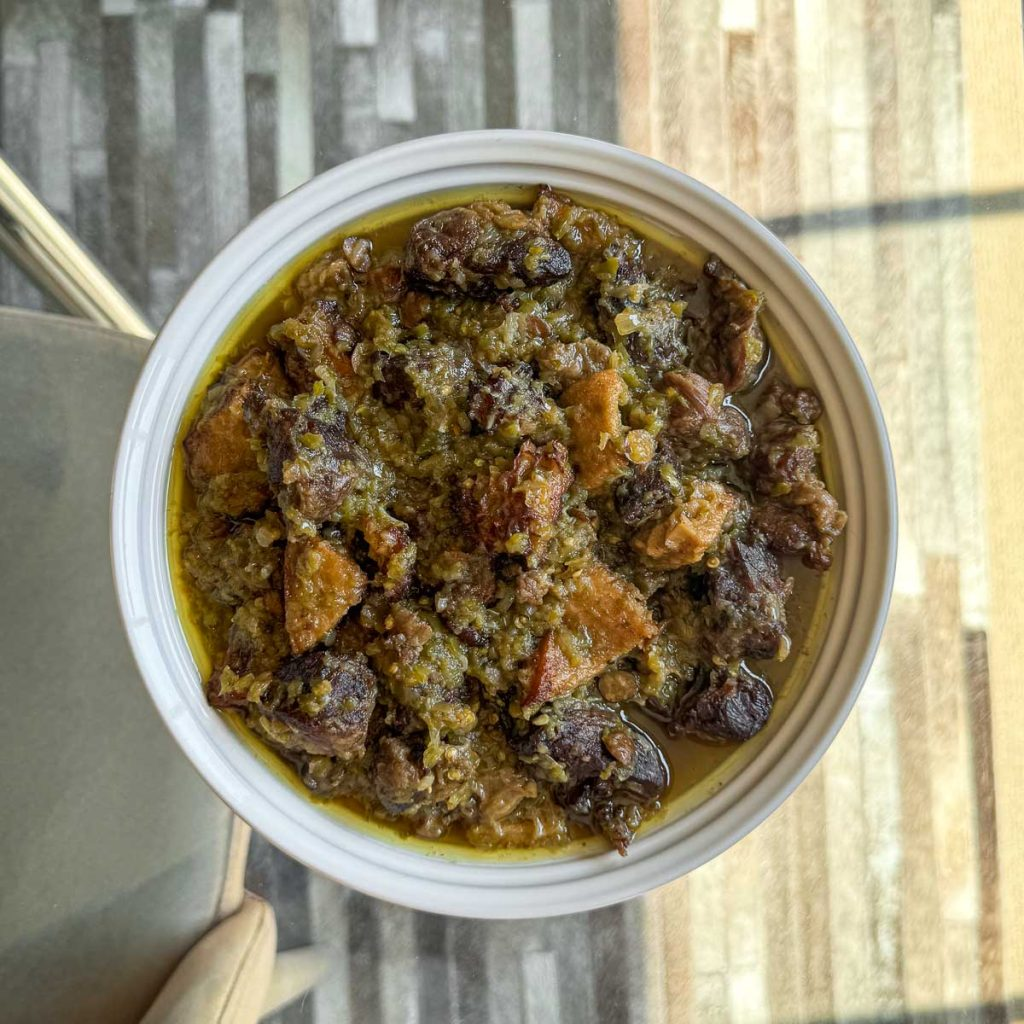
Let’s be clear from the start: this is not a gentle stew. Ayamase, also known as Designer Stew or Ofada Stew, is an experience. It’s a dish that commands attention, with its intimidating dark green color and its fierce, aromatic heat. I first had it at a cousin’s wedding, served in a small, sleek bowl next to the familiar Jollof. I took one bite and my entire palate stood at attention. The deep, smoky flavor of the burnt peppers, the earthy richness of the palm oil, the funky punch of the iru… it was complex, adult, and utterly addictive. This stew is a lesson in transformation. Through the simple, crucial act of “bleaching” the palm oil, you turn a raw, red liquid into a deep, nutty base that can stand up to the assault of peppers. It’s a stew for when you’re feeling brave, for when you want to shake up your routine. It’s the culinary equivalent of turning the volume all the way up.
Quick Look
| Prep | Cook | Total | Feeds | Level |
|---|---|---|---|---|
| 30 mins | 1 hr | 1 hr 30 mins | 6-8 people | Medium |
Why You’ll Love This Recipe
- The flavor is an unforgettable powerhouse. Smoky, spicy, rich, and deeply savory all at once.
- It’s naturally vibrant and “clean” tasting. There are no tomatoes, allowing the peppers to be the star.
- It’s a versatile centerpiece. Perfect with Ofada rice, white rice, boiled plantains, or even yams.
- It has serious “wow” factor. Its unique color and bold taste will impress anyone you serve it to.
Grab These
For the Pepper Mix:
- 4-5 large green bell peppers
- 6-10 fresh green scotch bonnet or habanero peppers (adjust for your fire tolerance!)
- 2 large red onions, roughly chopped
For the Stew Base:
- 1 ½ cups red palm oil (Do not substitute! This is the soul of the dish.)
- 1 lb assorted meat and offal (beef, tripe (shaki), cow skin (ponmo), liver) – boiled until tender
- 2 tbsp iru (fermented locust beans)
- 2 tbsp ground crayfish
- 2-3 stock cubes, crushed
- Salt to taste
- Optional: ½ cup boiled and sliced cow skin (ponmo)
Let’s Make It
First, we must prepare our weapons: the peppers. This step is crucial for the signature smoky depth. Wash the green bell peppers and scotch bonnets. You can roast them in one of two ways: Method A (The Traditional Blister): Place them directly on the stovetop burner grates over a medium flame. Turn them with tongs until the skins are completely blackened and blistered all over. Method B (The Oven Cheat): Place them on a baking sheet and broil on high, turning occasionally, until charred. The stovetop method gives a more intense smoke, but the oven works well. Once charred, place them in a bowl and cover with plastic wrap for 10 minutes. This steams them, making the skins easy to peel off. Peel off most of the blackened skin (a few bits are fine for flavor), remove the stems, and discard the seeds if you desire less heat.
Now, blend your base. In a blender, combine the peeled, charred peppers and the roughly chopped red onions. Pulse until you have a coarse, textured puree. Do not blend it smooth! You want some bits and pieces for texture. This rough blend is a hallmark of a great Ayamase.
Here comes the most important step: bleaching the palm oil. In a large, dry pot (a Dutch oven is perfect), pour in the palm oil. Heat it over medium heat for 10-15 minutes. You are watching for a transformation. It will go from bright red and opaque to a clear, light red-orange color, and it will start to smoke very lightly. It will smell nutty and rich. Watch it like a hawk. The line between bleached and burnt is thin. Once it’s clear and smoking lightly, it’s ready. This process removes the raw taste and unlocks a deep, nutty flavor that is the foundation of the stew.
Carefully add your blended pepper mixture to the hot oil. It will sizzle and splatter dramatically—stand back! Stir to combine. Let this fry, stirring occasionally, for 20-30 minutes. You are looking for the water content to evaporate. The color will change from a bright, vibrant green to a deep, dark, olive green, and the oil will start to separate and float to the top. This long fry is essential for concentrating the flavor and taming the raw pepper heat.
Once the oil is floating on top, you know you’re there. Now, add your pre-cooked assorted meats, the iru, crayfish, and crushed stock cubes. Stir well and let it simmer for another 10-15 minutes, allowing the meats to soak up the incredible sauce. Taste and adjust with salt. The stew should be intensely flavorful, smoky, and spicy.
Nutritional Facts (Per Serving)
| Nutrient | Amount |
|---|---|
| Calories | ~ 380 kcal |
| Protein | 20g |
| Carbohydrates | 10g |
| Fat | 30g |
| Fiber | 3g |
| Sugar | 5g |
| *Note: | Values are estimates |
Variations & Add-Ins
- Boiled Eggs: Add peeled, hard-boiled eggs for the last 5 minutes of cooking.
- Fish Version: Use smoked mackerel or fried fish in place of, or in addition to, the assorted meats.
- Vegetarian Twist: Use a mix of hearty mushrooms and cubed, firm tofu. Use vegetable stock cubes.
Serving Ideas
This stew is traditionally served with locally grown Ofada rice, which has a unique, slightly sour taste and aroma. It’s also sublime with plain white rice, boiled white yams, or even as a sauce for boiled plantains. The sharp, bold flavor of the stew needs a simple, starchy counterpart.
Storage & Reheating
This stew freezes exceptionally well and the flavors improve over time. Store in an airtight container in the fridge for up to 5 days or in the freezer for up to 3 months. Reheat gently on the stovetop, adding a tiny splash of water if necessary.
My Two Cents
The single most important tip is to bleach the palm oil correctly. If you don’t heat it enough, your stew will have a raw, unpleasant palm oil taste. If you burn it, the entire batch will be bitter and ruined. Look for that clear, light red color and the first wisp of smoke. It should smell like toasted nuts, not acrid smoke. Your entire dish hinges on this one step.
You Asked, I’m Answering
“My stew is too bitter!”
You likely burned the palm oil during the bleaching stage, or you didn’t remove enough of the charred skin from the peppers. Unfortunately, there’s no fixing this. Next time, watch the oil more carefully and peel the peppers more thoroughly.
“It’s not spicy enough!”
Next time, increase the number of scotch bonnet peppers and do not remove the seeds. You can also add a teaspoon of cayenne pepper to the blend for an extra kick without altering the color.
“There’s so much oil!”
That’s part of the dish! The palm oil is a key component of the flavor and texture. However, if it’s too much for you, you can carefully spoon some of the excess oil off the top after the stew is finished cooking. But I encourage you to embrace it—it’s what makes it so luxurious.