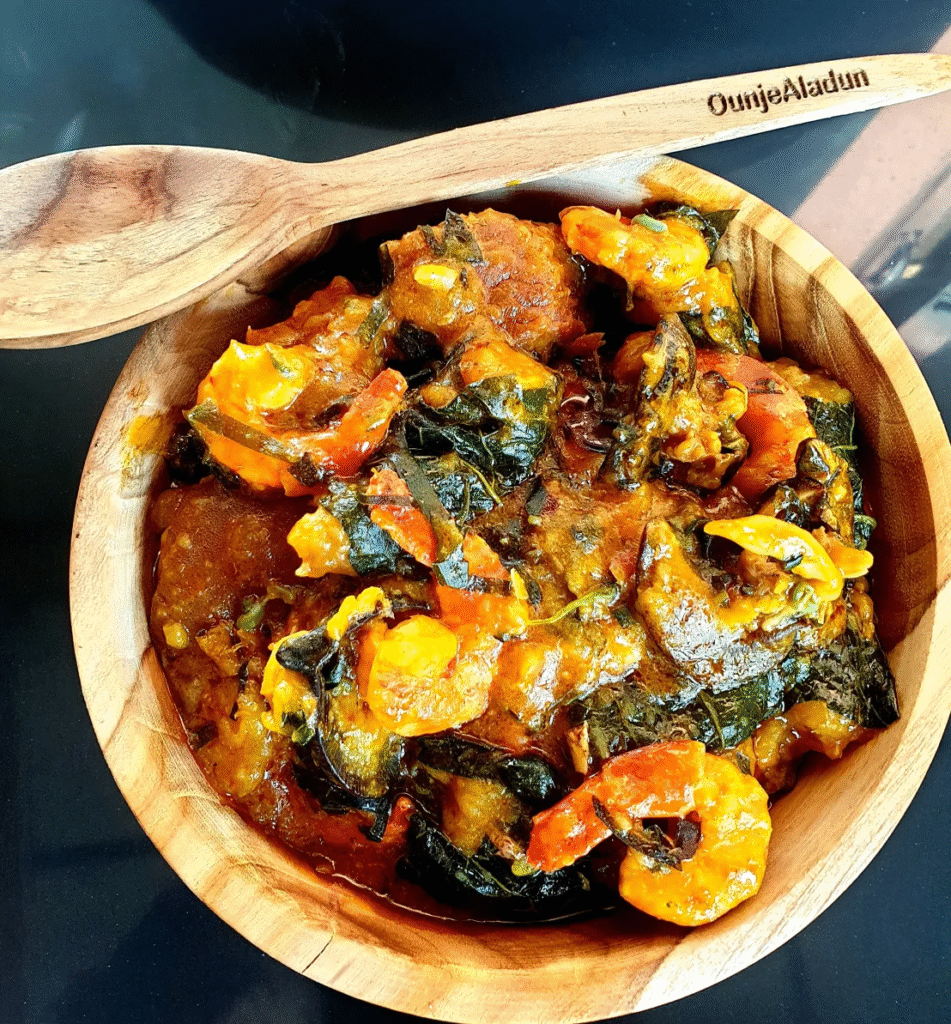
There are some dishes that whisper of home, and others that shout it from the rooftops. Ekpang Nkukwo is the latter. It is a dish that demands commitment. The first time I attempted it, I called my mother, my aunty, and three different cousins, my fingers glued together with grated cocoyam, my kitchen a warzone of plantain leaves and doubt. “Why are you stressing yourself?” my Aunty Nkoyo laughed over the phone. But when I finally tasted that first, steaming spoonful—the earthy, dense cocoyam dumplings, the rich, palm oil-infused broth, the subtle heat of the pepper—I understood. This isn’t just food; it’s a ritual. It’s the taste of generations of women working together in a kitchen, of stories shared over the rhythmic grating of tubers. It’s hearty, it’s primal, and it is, without a doubt, one of the most comforting and rewarding dishes to ever grace a bowl.
Quick Look
| Prep | Cook | Total | Feeds | Level |
|---|---|---|---|---|
| 1 hr 30 mins | 1 hr 30 mins | 3 hrs | 6-8 people | Advanced |
Why You’ll Love This Recipe
- It’s a textural masterpiece. The soft, slightly sticky cocoyam dumplings against the flaky fish and tender vegetables is an experience.
- The flavor is deeply earthy and complex. It’s a unique taste that is both comforting and exciting.
- It’s a culinary achievement. Successfully making Ekpang Nkukwo is a badge of honor.
- It’s a celebration of community. This is a dish best made with helpers and shared with a crowd.
Grab These
For the Cocoyam Paste & Wrapping:
- 8-10 medium cocoyams (or 4-5 large taro roots)
- 1 cup water, approximately
- Uziza leaves, scent leaves (Effirin/Nchanwu), or spinach (as a substitute)
- Plantain leaves or parchment paper, for wrapping (optional, but traditional)
For the Rich Broth:
- ½ cup red palm oil
- 1 large red onion, finely chopped
- 2-3 tbsp ground crayfish
- 1-2 smoked mackerel or catfish, deboned and flaked
- 1 cup cooked periwinkles (optional, but classic)
- 1-2 fresh hot peppers (scotch bonnet or habanero), whole
- 1 bunch waterleaf (Talinum triangulare), finely sliced (or 2 cups spinach)
- 1 bunch pumpkin leaves (ugwu), finely sliced
- 1 tbsp ground ehuru (calabash nutmeg) – optional, but aromatic
- 2 stock cubes (seasoning cubes)
- Salt to taste
Let’s Make It
First, we must confront the beast: the cocoyam. Please, wear gloves! The raw sap can irritate your skin. Peel the cocoyams thoroughly, getting rid of every bit of skin and any dark spots. You’ll be left with slippery, white tubers. Now, the grating. You can use the fine side of a box grater, but if you have a food processor with a grating attachment, this is its moment to shine. Grate all the cocoyam into a large bowl. It will be a sticky, paste-like substance.
Now, we achieve the right consistency. Gradually add water, a few tablespoons at a time, to the grated cocoyam, mixing with your hands. You’re aiming for a very thick, but slightly pourable, batter. It should be able to hold its shape but not be dry. This step is feel, not science. Season this paste with a pinch of salt.
Now, the wrapping. This is the most meditative part. Take a spoonful of the cocoyam paste. If you’re using leaves, place it in the center of a prepared (wilted over a flame for flexibility) plantain or scent leaf. Fold the leaf over to form a small, tight parcel. If you’re not using leaves, you can simply drop spoonfuls directly into the pot—they’ll be more rustic and irregular, but just as delicious. The leaf-wrapping gives a subtle herbal fragrance and a beautiful presentation.
Let’s build the pot. In a large, heavy-bottomed pot, heat the palm oil over medium heat until it’s warm but not smoking. Add half of the chopped onions and fry until they’re soft and translucent. This sweetens them and takes the edge off. Now, add the ground crayfish and stir for 30 seconds until fragrant.
Carefully arrange your wrapped cocoyam dumplings in a single layer at the bottom of the pot. It’s okay if they’re snug. Pour in just enough water to come halfway up the dumplings. Do not submerge them! Bring to a gentle boil, then reduce the heat to low, cover the pot, and let them steam for 20-25 minutes. This first cook sets the dumplings.
After 20 minutes, gently shake the pot—do not stir! The dumplings should be firming up. Now, add the flaked smoked fish, periwinkles, stock cubes, the whole hot peppers, and the remaining chopped onion. Add the sliced waterleaf and pumpkin leaves on top. Again, do not stir. Just let the leaves wilt from the steam. Drizzle a little more palm oil over the top if you like. Cover and let it cook on low for another 20-25 minutes.
By now, your kitchen will smell like heaven. The vegetables will have wilted and released their water, creating a natural, thick sauce. Now, and only now, can you gently fold everything together. Be tender with the dumplings; you don’t want to break them. Taste and adjust for salt. Let it simmer, uncovered, for a final 5-10 minutes to allow the flavors to marry and any excess liquid to evaporate. The final consistency should be thick, like a hearty stew, not a soup.
Nutritional Facts (Per Serving)
| Nutrient | Amount |
|---|---|
| Calories | ~ 420 kcal |
| Protein | 15g |
| Carbohydrates | 55g |
| Fat | 16g |
| Fiber | 8g |
| Sugar | 3g |
| *Note: | Values are estimates |
Variations & Add-Ins
- Protein Swap: Use smoked turkey or beef instead of, or in addition to, the fish.
- Creamier Texture: Add a cup of coconut milk along with the second round of vegetables for a richer, slightly sweet twist.
- Spicier Kick: Pierce the whole peppers before adding them to let more heat into the broth.
Serving Ideas
This is a main course, a complete meal. Serve it very hot, in deep bowls, with a cold glass of palm wine or a robust beer. It needs no accompaniment, but a wedge of fresh, ripe avocado on the side is a beautiful contrast.
Storage & Reheating
Leftovers will keep in the fridge for up to 4 days. The flavors meld and deepen beautifully. Reheat gently on the stovetop with a splash of water to prevent sticking. It also freezes quite well for up to 2 months.
My Two Cents
The single most important tip is PATIENCE. Do not stir the pot until the very end. I know it’s tempting. You want to check, to mix, to see what’s happening. But trust the process. The initial steaming cooks the cocoyam dumplings through without them disintegrating into mush. Stirring too early will break your beautiful parcels and turn your majestic pot into a sticky, gluey porridge. Let the steam do its work.
You Asked, I’m Answering
“My cocoyam paste is too watery/too thick!”
If it’s too watery, add a little more grated cocoyam or a tablespoon of cocoyam flour. If it’s too thick and won’t wrap, add water a teaspoon at a time until it’s pliable.
“I can’t find fresh cocoyam. What can I use?”
You can use frozen, pre-peeled cocoyam, thawed completely. In a real pinch, a mix of grated potato and yam can mimic the texture, but the unique, earthy flavor of cocoyam will be missing.
“It turned out gluey and sticky. What went wrong?”
This usually means the cocoyam was overworked or stirred too aggressively during cooking. Cocoyam is high in starch, and rough handling will release it all, creating a gluey texture. Handle with care, from grating to serving.