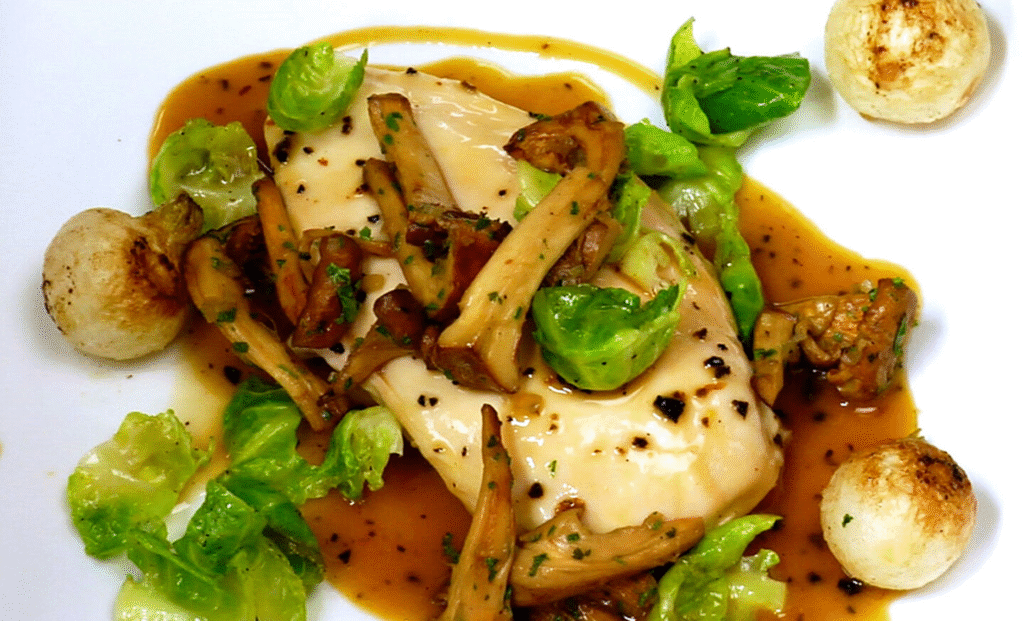
This is the most dramatic and surprisingly simple way to roast a chicken you will ever encounter. Encasing a whole chicken in a salt crust might seem intimidating, but it’s a foolproof method that seals in every bit of moisture and flavor, resulting in the most succulent, tender meat you’ve ever tasted. The truffle butter under the skin perfumes the entire bird with an earthy, luxurious aroma. It’s a spectacular centerpiece for a holiday or very special dinner party.
Quick Look
| Prep | Cook | Total | Feeds | Level |
|---|---|---|---|---|
| 30 min | 1.5 hours | 2+ hours | 4-6 | Surprisingly simple |
Why You’ll Love This Recipe
- The juiciest chicken of your life: The salt crust seals in all the natural juices.
- It’s incredibly impressive: Breaking open the crust at the table is pure theater.
- Foolproof and forgiving: It’s almost impossible to overcook the chicken this way.
- The truffle flavor is subtle and pervasive: It infuses the meat, not the salt crust.
Grab These
- 1 whole chicken (4-5 lbs), at room temperature
- 4 tbsp unsalted butter, softened
- 1-2 tbsp black truffle paste or 1 fresh black truffle, finely grated
- 4 lbs coarse sea salt
- 4-5 large egg whites
- ½ cup water
- 1 lemon, halved
- 1 bunch fresh thyme
Let’s Make It
Preheat your oven to 400°F (200°C). Pat the chicken completely dry, inside and out. In a small bowl, mix the softened butter with the truffle paste until well combined.
Gently loosen the skin of the chicken over the breast and thighs by sliding your fingers between the skin and the meat. Spread the truffle butter evenly under the skin. Place the lemon halves and thyme inside the cavity.
In a very large bowl, mix the coarse sea salt, egg whites, and water. It should have the consistency of wet sand—packable but not soupy.
On a baking sheet lined with parchment paper, create a ½-inch thick layer of the salt mixture slightly larger than the chicken. Place the chicken in the center.
Mound the remaining salt over the chicken, patting it down firmly to create a solid, thick crust that completely encases the bird. Make sure there are no cracks.
Roast for 1 hour and 15 minutes to 1 hour and 30 minutes (for a 4-5 lb bird). The crust will be very hard and light brown.
Remove from the oven and let it rest for 10 minutes. Bring the whole baking sheet to the table. Use a mallet or the back of a knife to crack open the salt crust dramatically. Brush away any salt crystals from the chicken before carving.
Nutritional Facts (Per Serving)
| Nutrient | Amount |
|---|---|
| Calories | ~ 450 kcal |
| Protein | 40g |
| Carbohydrates | 1g |
| Fat | 31g |
| *Note: | Values are estimates |
Variations & Add-Ins
- Herb-Infused: Add chopped fresh rosemary or sage to the butter mixture.
- Citrus Twist: Use an orange instead of a lemon inside the cavity.
- Without Truffle: Simply use herbed butter for an equally juicy, though less luxurious, result.
Serving Ideas
- Serve with simple sides that won’t compete: creamy polenta, roasted root vegetables, or a simple green salad.
- The pan juices from the chicken are incredibly flavorful—drizzle them over the carved meat.
Storage & Reheating
- Storage: Best enjoyed immediately. Leftover carved chicken can be stored in an airtight container for 2-3 days.
- Reheating: Reheat gently in a low oven to avoid drying out.
My Two Cents
- Pro-Tip: Don’t be shy with the salt crust. It needs to be thick and completely sealed to work its magic. The chicken itself will not be overly salty—the crust acts as a seal, not a seasoning.
You Asked, I’m Answering
Q: Is the chicken really not too salty?
A: I promise, it’s not! The salt crust hardens and creates a sealed environment that steams the chicken in its own juices. The salt doesn’t penetrate the skin in a significant way.
Q: Can I reuse the salt?
A: Unfortunately, no. The egg whites cook and bind the salt, and it picks up juices from the chicken. It must be discarded after use.