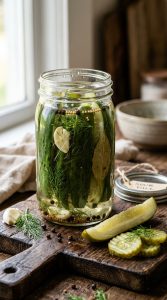
Making crisp, puckery sour pickles at home requires no specialized canning equipment or weeks of waiting. This quick-refrigerator sour pickle recipe delivers the snap, bright garlic aroma, and sharp, refreshing tang of traditional deli-style pickles using a simple brine boil and a short chill in the refrigerator. By using small, firm cucumbers, a focused blend of pickling spices, and a tannin-rich element like bay leaves, you achieve a remarkably crisp texture and deep, savory punch in just 24 to 48 hours.
Whether sliced into thick chips for burgers, cut into classic spears for a sandwich side, or left whole for snack crispness, these homemade pickles offer a clean, vibrant acidity without the artificial preservatives or muddy flavors found in many store-bought varieties. The recipe yields two quart-sized jars, making it easy to keep a batch ready in the fridge whenever a savory, crunchy craving strikes.
Recipe Overview
- Prep Time: 20 minutes
- Cook Time: 5 minutes
- Chilling Time: 24 hours
- Total Time: 24 hours 25 minutes
- Servings: 16 servings (about 2 spears or 4 slice chips per serving)
- Yield: 2 quart-sized (1-liter) glass jars
- Difficulty: Easy
- Equipment Needed: Two 1-quart (1-liter) wide-mouth glass jars with non-reactive lids, medium non-reactive saucepan (stainless steel or glass), chef’s knife, cutting board, measuring cups and spoons, heat-safe liquid measuring cup.
Ingredients
- Cucumbers: 2 pounds (900g) firm Kirby cucumbers or small Persian cucumbers, washed thoroughly
- Water: 2 cups (480ml) filtered water
- White Vinegar: 1 ½ cups (360ml) distilled white vinegar (5% acidity)
- Pickling Salt: 2 tablespoons (30g) pickling salt or fine non-iodized sea salt (do not use table salt with iodine or anti-caking agents)
- Granulated Sugar (Optional): 1 teaspoon (4g) granulated sugar (used solely to balance harshness, not to sweeten)
- Garlic: 8 cloves fresh garlic, peeled and lightly smashed
- Fresh Dill: 8 to 10 fresh dill sprigs (including fronds and soft stems)
- Black Peppercorns: 1 ½ teaspoons (4.5g) whole black peppercorns
- Yellow Mustard Seeds: 1 teaspoon (3g) whole yellow mustard seeds
- Bay Leaves: 2 dried bay leaves (one per jar; natural tannins help maintain vegetable crispness)
- Crushed Red Pepper Flakes (Optional): ½ teaspoon (1g) crushed red pepper flakes for mild heat
Detailed Step-by-Step Instructions
- Prepare the Cucumbers:
Inspect the cucumbers for softness or blemishes, choosing only firm, taut-skinned specimens. Scrub them well under cold running water to remove any field dirt. Slice off a thin 1/16-inch (1.5mm) blossom end from each cucumber (the blossom end contains enzymes that soften pickles during storage). Cut the cucumbers into your preferred shape: ¼-inch (6mm) thick rounds, length-wise quartered spears, or leave very small cucumbers whole. - Prepare the Jars and Aromatics:
Wash two 1-quart (1-liter) wide-mouth glass jars and their lids thoroughly with warm, soapy water, then rinse well and dry. Divide the aromatics evenly between the two jars. Into each jar, place 4 smashed garlic cloves, 4 to 5 sprigs of fresh dill, ¾ teaspoon black peppercorns, ½ teaspoon yellow mustard seeds, 1 dried bay leaf, and ¼ teaspoon crushed red pepper flakes (if using). - Pack the Jars:
Pack the cucumber spears or slices tightly into the jars over the aromatics. If using spears, stand the jars slightly tilted and layer the spears vertically, wedging them closely so they do not float once liquid is added. Leave approximately ½ inch (1.25cm) of space between the top of the cucumbers and the rim of the jar. - Prepare the Sour Brine:
In a medium non-reactive stainless steel saucepan, combine the 2 cups (480ml) of filtered water, 1 ½ cups (360ml) of distilled white vinegar, 2 tablespoons (30g) of pickling salt, and 1 teaspoon (4g) of sugar (if using). Place over medium-high heat and bring to a rolling boil, stirring occasionally until the salt and sugar completely dissolve, about 3 to 4 minutes. - Pour the Brine:
Carefully pour the hot brine over the packed cucumbers in each jar using a funnel or ladle. Ensure all cucumbers are fully submerged under the liquid while maintaining ½ inch (1.25cm) of headspace at the top of each jar. Tap the jars gently on a wooden cutting board or folded towel to release trapped air bubbles. If necessary, top off with a tiny bit more warm brine. - Seal and Cool:
Place the lids securely on the jars. Allow the jars to sit undisturbed at room temperature until they cool down to warm-room temperature, approximately 1 to 1 ½ hours. - Chill and Cure:
Transfer the cooled jars directly to the refrigerator. Allow the pickles to cure in the cold brine for at least 24 hours before opening. For full, deep sour flavor and maximum brine absorption, allow them to rest in the refrigerator for 48 hours to 4 days prior to serving.
Expert Tips for Success
- Select the Right Cucumber Variety: Standard thick-skinned English or field cucumbers contain high water content and soft seeds, which soften quickly in brine. Pickling varieties like Kirby or small, firm Persian cucumbers yield superior snap and dense flesh.
- Trim the Blossom End: The blossom end opposite the stem contains natural enzymes that break down pectin and cause soft, mushy pickles. Slicing off a small sliver ensures your pickles remain firm.
- Use Additive-Free Salt: Standard iodized table salt turns pickling liquid cloudy and can impart a faint metallic taste. Pickling salt, pure kosher salt (measured by weight), or non-iodized sea salt dissolves cleanly and maintains clear brine.
- Maintain Tannins for Texture: Dry bay leaves, grape leaves, or oak leaves release natural tannins into the liquid. These tannins bind to the cell walls of the cucumber skin, keeping the texture snap-crisp over extended storage.
- Chill Water Immersion (Optional Pre-Soak): If your cucumbers were harvested a few days prior to pickling, soak them whole in an ice-water bath for 30 to 60 minutes before slicing and packing to restore tissue turgor.
Substitutions and Variations
- Half-Sour Pickles: To make classic deli-style half-sours, reduce the vinegar to ¾ cup (180ml) and increase the filtered water to 2 ¾ cups (660ml). Decrease chilling time to 12 to 24 hours before serving.
- Extra Garlic Dil-Sour: Increase the smashed garlic to 6 to 8 cloves per jar and add ¼ teaspoon of whole dill seed alongside the fresh dill sprigs for an assertive, savory kick.
- Spicy Sour Pickles: Add 2 fresh habanero or jalapeño peppers (halved lengthwise) to each jar along with ½ teaspoon of hot red pepper flakes to create a sharp, fiery brine.
- Other Vegetables: This exact brine ratio works exceptionally well for quick-pickling green beans, sliced radishes, cauliflower florets, or thick carrot coins.
Storage Guidance
- Refrigeration: Because this is an unpasteurized refrigerator quick-pickle, jars must be kept chilled continuously below 40°F (4°C). They will maintain peak crunch and flavor for up to 1 month in the refrigerator.
- Freezing: Do not freeze sour pickles. Freezing breaks down the cell structure of high-moisture vegetables, rendering them limp and mushy upon thawing.
- Food Safety Check: Always use clean utensils to remove pickles from the jar rather than hands to prevent introducing wild mold or bacteria. Discard the batch if the liquid turns slimy, develops off odors, or shows surface mold.
Nutrition Information
Note: Nutritional values are estimates based on standard liquid absorption rates for quick-pickled vegetables. Most of the brine sodium remains in the liquid and is not fully consumed.
| Nutritional Metric | Amount Per Serving (2 Spears / ~50g) |
|---|---|
| Calories | 10 kcal |
| Total Fat | 0g |
| Saturated Fat | 0g |
| Sodium | 380mg |
| Total Carbohydrates | 2g |
| Dietary Fiber | 0.5g |
| Sugars | 1g |
| Protein | 0.5g |
Frequently Asked Questions
Why are my quick pickles soft instead of crunchy?
Soft pickles usually result from using overripe or non-pickling cucumbers, failing to trim the enzyme-rich blossom end, or using brine that was boiled too long while cucumbers were immersed. Always choose small, firm Kirby cucumbers and ensure jars are cooled at room temperature before moving promptly to cold refrigeration.
Can I process these jars in a hot water bath for long-term shelf storage?
This recipe was developed specifically as a fresh refrigerator quick-pickle to preserve raw crunch and bright garlic notes. Processing them in a boiling water bath canning process will heat-cook the cucumbers, changing their texture from snap-crisp to soft.
Can I reuse the leftover sour pickle brine?
You can reuse leftover pickle brine once as a marinade for chicken, a tangy addition to potato salad dressings, or mixed into dirty martinis. However, do not reuse old brine to pickle fresh cucumbers, as the acidity level drops and dilution occurs during the initial pickling process.
Why did my brine turn cloudy?
Cloudiness in refrigerator pickles is usually caused by minerals in hard tap water or anti-caking agents in standard table salt. Using filtered water and pure pickling or non-iodized sea salt prevents brine cloudiness.
Serving Suggestions
Serve these cold, crisp sour pickles straight from the jar alongside classic deli pastrami or corned beef sandwiches, smash burgers, grilled cheese, or smoked barbecue ribs. Thinly sliced rounds add a sharp, cleansing contrast when layered onto rich tortas, pulled pork sandwiches, or chopped into homemade tartar sauce and potato salads.