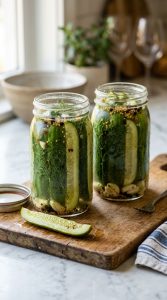
A outstanding dill pickle relies on a precise balance of sharp acidity, fragrant herbs, and an undeniable, satisfying crunch. While store-bought pickles often lean soft or overly processed, making quick refrigerator dill pickles at home gives you complete control over texture and flavor depth. By combining crisp pickling cucumbers with fresh dill sprigs, toasted whole spices, and a balanced vinegar brine, this recipe yields bright, snappy pickles with a vibrant garlic-herb profile.
The secret to keeping these pickles remarkably crisp lies in two simple techniques: trimming the blossom end of the cucumber—which contains naturally occurring enzymes that soften the fruit—and using a quick cold-pack method in the refrigerator rather than a heat processing bath. These pickles are ideal for slating onto deli sandwiches, chopping into salad dressings, or serving alongside savory grilled dishes.
Recipe Overview
- Prep Time: 20 minutes
- Cook Time: 5 minutes
- Chilling Time: 24 hours
- Total Time: 24 hours 25 minutes
- Yield: 2 quart jars (approx. 16 servings, 2 spears per serving)
- Difficulty: Easy
- Equipment Needed: Two 1-quart (1-liter) wide-mouth glass jars with tight-fitting lids, medium non-reactive (stainless steel or enamel) saucepan, sharp chef’s knife, cutting board, measuring cups and spoons, liquid measuring cup, canning funnel.
Ingredients
For the Jar Aromatics
- 2 lbs (900g) Kirby or pickling cucumbers, firm, small to medium-sized (4 to 5 inches long)
- 1 cup packed fresh dill fronds and sprigs (about 30g / 1 large bunch), divided
- 8 garlic cloves, peeled and lightly smashed
- 1½ teaspoons (4.5g) whole black peppercorns, divided
- 1 teaspoon (3g) yellow mustard seeds, divided
- 1 teaspoon (3g) dill seeds, divided
- ½ teaspoon (1g) crushed red pepper flakes (optional, for mild warmth), divided
- 2 dried bay leaves, divided
For the Pickling Brine
- 2 cups (480ml) distilled water
- 1½ cups (360ml) distilled white vinegar (5% acidity)
- ½ cup (120ml) apple cider vinegar (5% acidity)
- 2 tablespoons (36g) pickling salt or pure fine sea salt (do not use iodized table salt)
- 1 tablespoon (12g) granulated sugar
Instructions
- Prepare the jars: Thoroughly wash two 1-quart (1-liter) wide-mouth glass jars and their lids with warm, soapy water. Rinse completely and dry thoroughly. Place the jars on a clean kitchen towel on your countertop.
- Prep the cucumbers: Wash the cucumbers under cold running water, using a soft vegetable brush to remove any dirt. Slice off the blossom end of each cucumber (the tip opposite the stem stem end) by removing a thin 1/16-inch (1.5mm) slice. Cut the cucumbers length-wise into quarters to form spears, or slice them crosswise into 1/4-inch-thick (6mm) rounds, depending on your preference.
- Distribute the aromatics: Divide the garlic, peppercorns, mustard seeds, dill seeds, red pepper flakes (if using), and bay leaves equally between the two clean glass jars (4 garlic cloves, ¾ tsp peppercorns, ½ tsp mustard seeds, ½ tsp dill seeds, ¼ tsp red pepper flakes, and 1 bay leaf per jar). Divide half of the fresh dill sprigs between the two jars as well.
- Pack the jars tightly: Pack the cucumber spears or slices vertically into the jars as tightly as possible without crushing them. Packing them snugly prevents the pickles from floating once the brine is added. Tuck the remaining fresh dill sprigs into the gaps between the cucumbers along the sides of the jars.
- Simmer the brine: In a medium stainless steel saucepan, combine the distilled water, white vinegar, apple cider vinegar, pickling salt, and granulated sugar. Bring the mixture to a gentle boil over medium-high heat (about 212°F / 100°C), stirring occasionally until the salt and sugar completely dissolve, about 2 to 3 minutes. Remove the brine from heat.
- Pour the brine: Carefully pour the hot brine into each packed jar using a funnel, fully submerging the cucumbers and leaving roughly ½ inch (1.25cm) of headspace at the top of each jar.
- Remove air bubbles and seal: Gently tap the jars on the counter or run a clean chopstick or plastic utensil down the inside edge of the jars to release any trapped air bubbles. Top off with extra brine if the liquid level drops. Wipe the jar rims clean with a moist paper towel. Screw the lids on tightly.
- Cool and chill: Allow the jars to cool undisturbed on the counter until they reach room temperature, approximately 1 to 2 hours. Transfer the jars to the refrigerator. Allow the pickles to cure in the refrigerator for at least 24 hours before opening to let the flavors fully penetrate the cucumbers.
Expert Tips
- Trim the blossom end: The blossom end of cucumbers contains enzymes (specifically pectinase) that break down cell walls and cause pickles to turn soft and mushy. Always trim at least 1/16-inch off the blossom end.
- Use non-iodized salt: Standard table salt contains iodine and anti-caking additives that turn pickling brine cloudy and can impart a faint metallic taste. Pickling salt or additive-free pure sea salt dissolves cleanly and yields clear brine.
- Maintain cucumber freshness: Use cucumbers that are firm, unblemished, and small. Standard field or English cucumbers have thick, waxy skins and watery seed centers that do not hold up well to pickling. If cucumbers feel slightly soft before pickling, soak them in ice water for 30 minutes to restore crispness before slicing.
- Balance the vinegar ratio: A blend of distilled white vinegar (for sharp, clean acidity) and apple cider vinegar (for rounded fruitiness) provides a layered brine profile without overpowering the natural cucumber flavor. Ensure any vinegar used states “5% acidity” on the label.
Substitutions and Variations
- Spicy Dill Pickles: Increase the crushed red pepper flakes to 1 teaspoon per jar, or add 1 to 2 fresh habanero or jalapeño peppers (sliced in half vertically) to each jar alongside the garlic.
- Extra Garlic (Kosher Style): Double the garlic content to 8 cloves per jar and add ¼ teaspoon of onion powder or sliced fresh yellow onion to the brine for a classic Jewish deli flavor profile.
- Herbal Twist: Substitute a portion of the fresh dill with fresh grape leaves (which also contain natural tannins that enhance crispness), fresh coriander sprigs, or a strip of lemon zest.
- Cucumber Alternatives: Persian cucumbers work exceptionally well as a substitute for Kirby cucumbers due to their thin skin and low seed count. Cut them into thick spears or coin shapes.
Storage Guidance
- Refrigeration: Because this is a quick refrigerator pickle recipe (not heat-processed for shelf-stable shelf storage), these pickles must be kept refrigerated at all times. They will remain crisp and flavor-packed for up to 1 month in the refrigerator.
- Freezing: Do not freeze these pickles. Freezing ruptures the cellular walls of high-water-content vegetables like cucumbers, turning them completely mushy upon thawing.
- Safety note: Keep the pickles submerged beneath the brine liquid surface. Always use clean utensils to remove pickles from the jar to prevent introducing unwanted bacteria.
Nutrition Information
Note: Nutrition values are estimates based on standard ingredient calculations per serving (2 pickle spears, or approx. 50g). Brine sodium absorption varies based on steeping time.
| Nutrient | Amount Per Serving |
|---|---|
| Calories | 12 kcal |
| Total Fat | 0.1g |
| Saturated Fat | 0g |
| Sodium | 380mg |
| Total Carbohydrates | 2.5g |
| Dietary Fiber | 0.6g |
| Sugars | 1.1g |
| Protein | 0.4g |
Frequently Asked Questions
Why are my pickles soft instead of crunchy?
Soft pickles usually result from using mature cucumbers with large seed pockets, skipping the removal of the blossom end, using warm cucumbers during packing, or using brine that was poured while boiling hot directly onto fragile cucumbers. Soaking cucumbers in ice water before processing and ensuring prompt refrigeration keeps cell walls intact.
Can I reuse the leftover pickling brine?
You can reuse leftover brine once to pickle a fresh batch of sliced vegetables (such as radishes, red onions, or extra cucumber slices). However, because the original cucumbers release water into the brine, the acidity level lowers over time. For best results and crispness, boil the used brine briefly and add 2 tablespoons of extra white vinegar before pouring it over new vegetables.
Can this recipe be processed in a water bath canner for room temperature storage?
This specific recipe is formulated for refrigerator storage. While the vinegar-to-water ratio is safe for processing, heat-processing pickles in a hot water bath will cook the cucumbers slightly, resulting in a softer texture than a refrigerator pickle. If heat-canning, process quart jars in a boiling water bath for 15 minutes and consider adding a calcium chloride product (such as Pickle Crisp) to maintain firm texture.
Why did my brine turn cloudy?
Cloudiness in refrigerator pickles is usually caused by using table salt containing anti-caking agents, using hard tap water high in minerals, or natural protein breakdown from spices. If the pickles have been continuously refrigerated, smell fresh, and show no signs of active fermentation (bubbling or off odors), cloudy brine from minerals or non-iodized salt additives is completely safe.
Serving Suggestions
Serve these garlic dill pickles cold directly from the refrigerator. Their bright acidity makes them an exceptional counterpart to rich, savory foods. Dice them fine to elevate a classic potato salad, tuna salad, or tartare sauce. Arrange whole spears alongside slow-cooked smoked meats, grilled bacon cheeseburgers, or roasted turkey sandwiches. They also make a refreshing component on a charcuterie platter featuring sharp cheddar, cured salami, and crusty sourdough bread.